The ABCs of Sleep and Bedding
What Adjustable Bed Features Can Add to Your Nightly Routine
A bed that changes position can make room for more than sleep. From a simple head lift to softly lit pathways and saved settings, adjustable features can shape how you read, unwind, and settle in. The art is knowing which conveniences support your real routine—and which are simply extra buttons.
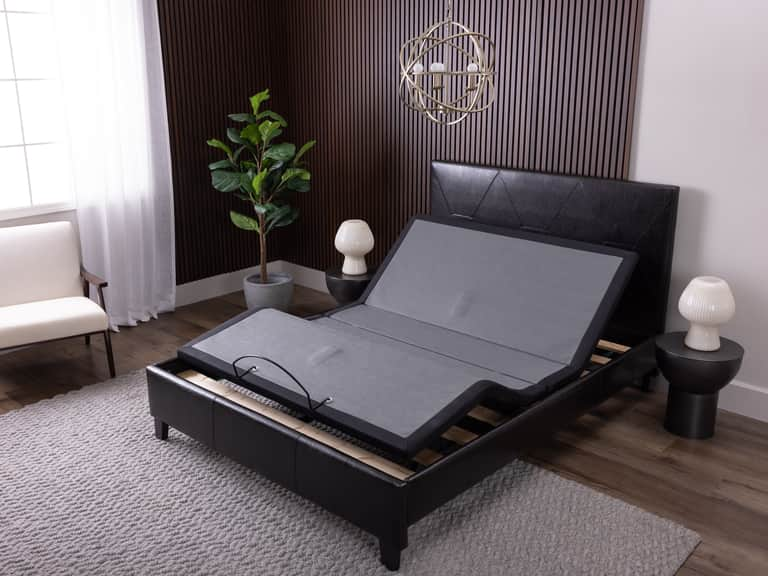
An adjustable bed is best understood as a flexible foundation, not a promise of perfect sleep. At its simplest, it raises the head, feet, or both. More elaborate models may add preset positions, massage functions, under-bed lighting, USB ports, app controls, or other refinements. Each feature is designed to make a particular part of the evening easier, but usefulness depends on your habits, room, mattress, and preferences.
If your evenings include reading in bed, sharing a mattress with someone who likes a different position, or navigating a dark room before dawn, certain functions may earn their place. If you lie flat and rarely adjust your setup, a more modest base may be the more sensible choice. A thoughtful comparison begins not with the longest feature list, but with a clear picture of how you use your bed.
Start with the movement: head, feet, and independent adjustment
Head-and-foot adjustment is the central feature of an adjustable base. Separate motors can raise the upper or lower part of the bed, allowing you to fine-tune your position rather than relying on pillows to create an angle. The change can be subtle: a slight lift for reading, a gentle incline for watching a programme, or a different leg position for relaxing.
Independent movement means the head and foot sections can be adjusted separately. That distinction matters because not everyone wants their whole body to move as one plane. You might raise your head while keeping your legs level, or elevate your legs while leaving your upper body nearly flat. A model with separate controls offers more combinations; whether you will use them regularly is the practical question.
Adjustment is a matter of personal comfort, not a medical treatment. A particular angle may feel pleasant for one person and awkward for another. If you have a health condition, are recovering from surgery, or are considering a position to address a symptom, ask a qualified healthcare professional for advice rather than treating a bed feature as a substitute for care.
Presets: a shortcut to familiar positions
Presets save a position so you can return to it without making several small adjustments each night. Commonly labelled options include flat, television, zero gravity, or anti-snore. These names describe intended uses or configurations, not guaranteed outcomes. The actual position and available presets vary by model, and a label alone cannot tell you whether the setting will feel right.
A flat button is particularly useful for restoring the base to a level position before getting out of bed or making it. A reading or lounge preset can make the transition into an evening routine quicker. Some remotes also let you save a personal position, which is useful if you repeatedly settle at a particular incline.
Think of presets as convenient starting points. You can adjust from them if the position feels too high or too low, and you need not use every setting simply because it is available. For couples, the question is whether the base is a single surface or a split configuration with separate adjustment on each side. Check how each arrangement affects shared bedding, the frame, and the space between sleepers.
Remote controls and app operation
A remote should make adjustment simpler, not turn bedtime into a search for the right button. Examine the layout, the size and clarity of its controls, and whether commonly used actions—such as returning to flat—are easy to find. A wireless remote avoids a cord across the bed, while a flashlight or backlit buttons can be useful when the room is dark.
Some adjustable bases also offer control through a phone app. App operation may provide another way to adjust the bed or access saved positions, but it is worth asking whether the remote remains fully functional without a phone. Consider battery life, connection requirements, and whether you are comfortable keeping a device nearby at night. Technology should fit quietly into the routine, rather than making a basic adjustment dependent on a screen.
For a concrete example of a feature-rich base, the Leggett & Platt S-Cape HF 2.0 combines head and foot articulation with a Bluetooth remote and app controls. Its listed features also include programmable positions, dual massage, USB ports, under-bed lighting, adjustable legs, and a WallHugger design. These specifications illustrate the range of options available; they do not mean every sleeper needs the same collection of functions.
Massage functions: a relaxing extra, not an essential
Massage features typically use vibration or wave patterns built into the base. Depending on the model, you may be able to choose an area, intensity, pattern, or timer. For some people, a brief session creates a pleasant wind-down ritual. For others, the sensation is distracting or unlikely to be used after the novelty fades.
If massage is on your shortlist, check how it is controlled and whether it can be switched off independently of the bed’s positioning. A timer can help prevent a function from running longer than intended. Ask how the mechanism sounds in ordinary use, especially if you share a room or are sensitive to noise. Product descriptions may use terms such as “dual massage” or “wave technology,” but the exact experience depends on the system and the sleeper.
It is also helpful to separate a comfort feature from a therapeutic claim. A built-in massage function is not automatically a treatment for pain, circulation problems, or a sleep disorder. Consider it an optional amenity, and seek professional guidance for concerns that require medical attention.
Under-bed lighting for a quieter night-time transition
Lighting beneath the bed can illuminate the floor without switching on a bright overhead fixture. It may help you find slippers, locate a pathway, or move through a room during the night with less disruption. Some bases offer a simple light; others provide a choice of colours or remote operation.
Before prioritizing this feature, consider the bedroom itself. A low-profile base, a rug, or a narrow walkway may affect how useful the light is. Check whether the brightness is adjustable, how it is activated, and whether it can be turned off easily. If you are sensitive to light, the ability to keep the room dark when you are trying to sleep may matter more than colour options.
USB ports and bedside convenience
Built-in USB ports can keep a phone or other small device within reach while charging. Their position matters: ports may be placed on one or both sides of the base, and the most convenient location depends on the room layout and where you sleep. Check whether the ports are accessible when the bed is raised and whether the specifications meet your charging needs.
A charging port can simplify the bedside arrangement, but it need not encourage a phone to remain in hand until the lights go out. If your aim is a calmer evening, decide where the device belongs before choosing the feature. The best bedroom setup is not necessarily the one with the most integrated technology; it is the one that supports habits you actually want to keep.
WallHugger designs and the reach of the nightstand
When a traditional adjustable base lifts the head, the upper body may move away from the nightstand. A WallHugger-style mechanism is designed to shift the bed’s position as it rises, helping keep the sleeper closer to the bedside table. This can make a book, lamp, or glass of water easier to reach during an incline.
The value of this design depends on how close your nightstand sits and how you use it. Measure the space around the bed rather than assuming a feature name guarantees a particular fit. Consider the height and width of the table, the bed’s movement, and whether cables or objects might be disturbed when the base changes position.
The mattress must work with the base
Mattress compatibility is one of the most important checks before choosing an adjustable setup. Not every mattress is designed to bend repeatedly, and a mattress that is incompatible may not articulate as intended. Confirm the mattress maker’s guidance and the base manufacturer’s requirements before purchase. Ask about size, construction, thickness, weight limits, and whether the mattress warranty remains valid when used on an adjustable foundation.
Flexibility is not the only consideration. The mattress needs to remain stable as the bed moves, and bedding should be able to accommodate the change in position. A fitted sheet with a suitable fit and enough movement may be easier to manage than layers that pull tight or shift. If you use a mattress protector, check its fit and construction as well. The aim is a smooth, secure sleep surface—not fabric that bunches as the base rises.
Sheet material contributes to comfort, though it does not determine whether a mattress can flex. Cotton percale, for instance, is often chosen for its crisp, breathable feel. The BOVI Bitsy Dots Sheet Set is made from 100% cotton percale and is described as machine washable. It may suit someone looking for a light, patterned sheet set, but the essential compatibility check remains the mattress and the adjustable base’s specifications.
Measure the room—and the space beneath the bed
A base is part of the room’s architecture. Measure the bed frame, mattress, doorway, and route into the bedroom before arranging delivery. Adjustable foundations can be heavy, and their dimensions may affect installation, assembly, or future movement. Confirm whether the chosen base is designed to sit within an existing frame, on a platform, or directly on the floor.
Look closely at the area beneath the bed. Adjustable legs may offer several height settings, but the resulting clearance can differ from the current setup. If you store boxes under the bed, have a robot vacuum, or need room for cables, check the clearance in both the flat and raised positions. Make sure the movement path is unobstructed and that nothing can catch beneath the mechanism.
Frame compatibility deserves its own check. Some bases are designed to work with platform or pedestal frames; others require particular support conditions. A product description may use terms such as zero clearance, but you should verify what that means for the specific installation you have in mind. Ask about slat spacing, centre support, leg configuration, and whether the base needs to rest on its own legs.
Noise, weight capacity, and practical specifications
Motors operate whenever the base changes position, so noise may matter if one person adjusts the bed while another is sleeping. Ask whether the manufacturer provides sound information, and if possible, listen to the mechanism in person. A quieter system may feel more discreet, but the room, mattress, and installation can all influence what you hear.
Check the specified weight capacity and understand what the figure includes. Requirements can involve the mattress, occupants, and other load on the base, so read the manufacturer’s explanation rather than comparing numbers without context. A safety lock may also be relevant in households where controls need to be secured or where accidental adjustments would be inconvenient.
Warranty terms, assembly requirements, and service access are less glamorous than massage settings, but they are part of a confident purchase. Review the coverage for the frame, motor, remote, and electronics. Confirm who handles delivery and installation, and what support is available if a control or motor stops working. Everyday reliability often matters more than a feature that sounds impressive in a list.
A simple way to compare adjustable bed features
Begin with the activities you want to support. If reading is a nightly habit, prioritize easy head adjustment and an intuitive remote. If you share a bed and prefer different positions, investigate split configurations and how each side operates. If you want a gentler route across a dark room, consider under-bed lighting. If convenience matters most, review presets and charging access.
- Movement: Does the base offer head and foot adjustment, and can each move independently?
- Controls: Is the remote clear and comfortable to use? Can the base be operated without an app?
- Presets: Are the saved positions useful, customizable, and easy to return from?
- Extras: Will you genuinely use massage, lighting, USB ports, or app control?
- Compatibility: Is your mattress approved for the base, and will your frame support its installation?
- Room fit: Have you measured the bed, delivery route, nightstands, and under-bed clearance?
- Ownership: Are capacity, warranty, assembly, and service details clear?
A routine built around comfort, not complexity
An adjustable bed can give the evening a more adaptable rhythm: a comfortable incline for reading, a one-touch return to flat, or a soft pool of light for getting up without flooding the room. Its most valuable contribution may be the simplest one—the ability to make a small change without stacking pillows or rearranging the whole bed.
There is no universal setting that suits every sleeper, and a feature-rich base is not automatically a better one. Start with fit, compatibility, and ease of use. Then weigh the extras against your actual habits. The most successful sleep setup feels considered rather than complicated: the right mattress, bedding that sits smoothly, controls you can use without thinking, and only the conveniences that make the night more comfortable.