The ABCs of Bedding
Percale or Sateen? Understanding the Feel of Cotton Sheets
A sheet can greet the skin with the crisp freshness of a pressed shirt or the smooth, quiet glide of a softly polished fabric. That difference is often a matter of weave. Percale and sateen are two familiar cotton constructions, each with its own texture, appearance and care considerations—and neither is automatically the better choice.
Published October 25, 2026
Choosing cotton sheets is a tactile decision as much as a practical one. Color and pattern set the mood of a bed, but the weave determines much of what you notice when you slip between the sheets: whether the surface feels crisp or fluid, matte or softly lustrous, airy or gently enveloping. The distinction can make a familiar bedroom feel newly composed, even when the rest of the room stays exactly as it is.
Percale and sateen are both ways of weaving yarn, not types of cotton fiber. A label that says “cotton percale” or “cotton sateen” describes how the threads are arranged in the fabric. Fiber quality, yarn preparation, finishing and laundering all have a part to play in the result, too. Knowing the basics makes it easier to read a sheet description without relying on a single number or a promise of luxury.
The simplest guide is this: percale is typically crisp, breathable-feeling and matte; sateen is typically smooth, drapey and subtly lustrous. Those are useful starting points, not rigid rules. Your climate, preferred sleeping temperature, skin sensitivity, mattress setup and personal sense of comfort matter just as much as the name of the weave.
First, what does “weave” mean?
Woven fabric is made by interlacing two sets of yarns. The lengthwise threads are called the warp; the crosswise threads are called the weft. Their pattern of crossing, along with the yarns themselves, influences the fabric’s surface, drape and durability. Percale and sateen use different arrangements, creating noticeably different faces even when both fabrics are made from cotton.
In a basic percale construction, warp and weft threads cross in a balanced pattern, commonly described as one-over, one-under. This straightforward interlacing creates a surface that feels even and crisp, with a clean, matte appearance. Sateen uses a different pattern in which yarns float over several neighboring threads before passing under another. More yarn surface is exposed on the face, producing a smoother hand and a gentle sheen.
These descriptions explain the general character of each fabric, but they do not tell the whole story. Two percale sheets can feel different, just as two sateens can. The cotton’s staple length, the quality and evenness of the yarn, the fabric’s weight, finishing methods and subsequent care all affect how the sheet performs and feels.
Percale: crisp, cool in character, quietly classic
Percale has a fresh, composed quality. Its surface is generally matte rather than glossy, and its hand is often described as crisp, light or cool. For some people, that sensation recalls a well-made hotel bed: smooth, neat and just a little structured. The fabric tends to lie cleanly across the mattress rather than falling with the fluid drape associated with sateen.
Because its construction is relatively open and balanced, percale is often chosen by people who prefer an airy-feeling sheet or who dislike a very slick surface. It can be an appealing option in warmer weather, though no weave can guarantee that a sleeper will feel cool. Room temperature, humidity, mattress materials, sleepwear and individual temperature preferences all influence comfort. “Breathable” is best understood as a description of fabric character, not a promise of a particular body temperature.
New percale may feel firmer or more papery than expected, particularly before it has been washed and used. With regular laundering, many cotton percale fabrics relax and become softer while retaining their recognizable crispness. The transformation is gradual: the aim is not necessarily to make the fabric silky, but to let it settle into a more familiar, lived-in hand.
A useful example is the Bovi Escada Sheet Sets, made from 100% cotton percale at 200 thread count. They are described as lightweight, breathable and finished with a smooth matte surface. Available in Twin, Queen and King sizes, the set offers a straightforward illustration of percale’s tailored, fresh-sheet character.
Sateen: a smoother hand and a soft glow
Sateen is known for a smooth, supple surface and a subtle sheen. The weave’s longer floats allow more yarn to show on the fabric’s face, creating a polished appearance and a hand that many people find silky. It often drapes more fluidly than percale, bringing a softer, more relaxed line to the bed.
That softness can feel especially inviting to someone who prefers a close, smooth surface rather than a crisp one. Sateen may also look a little more formal: its quiet luster catches light without necessarily becoming glossy or theatrical. In a bedroom, that finish can lend even a simple white sheet a sense of depth and finish.
Because sateen’s surface is smoother and its drape can feel more substantial, some sleepers experience it as warmer or more enveloping than percale. That is a matter of perception and the complete bedding setup, not a universal rule. The fabric’s weight, the cotton and yarn quality, the room environment and the sleeper’s own preferences all contribute to the experience.
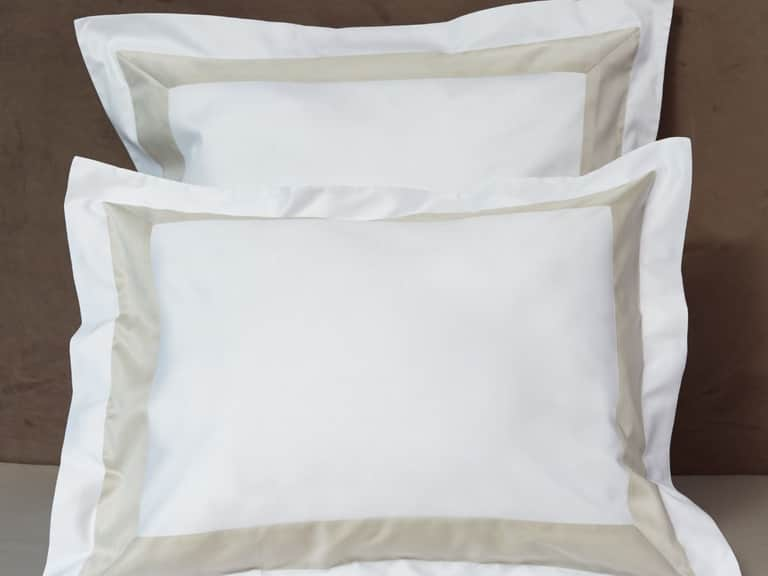
The Aida Sham offers an example of cotton sateen in a bedding accent: it is made in Italy from 100% extra-long-staple cotton sateen with a 300 thread count. Its applied border adds a defined, contemporary detail. A sham is a decorative pillow covering rather than a full sheet set, but it provides a useful sense of sateen’s smooth, softly bright character within a layered bed.
A side-by-side guide
When the choice feels abstract, return to the sensations you want from the bed. Think less about which weave sounds more luxurious and more about what you want to feel at the end of a long day.
- Surface: Percale is usually crisp and matte; sateen is usually smoother and subtly lustrous.
- Drape: Percale tends to look structured and tailored; sateen often falls with a softer, more fluid drape.
- First impression: Percale often feels fresh and airy; sateen often feels silky and gently enveloping.
- Personal preference: Choose according to touch and sleeping comfort, not a universal ranking.
- Care: Follow the specific maker’s instructions. Both cotton weaves benefit from thoughtful washing and drying.
Neither weave is inherently superior. A crisp percale can feel wonderfully clean to one person and too structured to another. Sateen’s smoothness may feel comforting to one sleeper and overly slick to someone else. The most useful recommendation is also the least complicated: if possible, handle fabric swatches or feel a sheet in person before deciding.
Thread count is only one part of the story
Thread count refers to the number of threads counted in a square inch of fabric, though the way the figure is calculated and presented can vary. It can be helpful context, but it is not a reliable shortcut for judging comfort. A higher number does not automatically mean a softer, cooler, more durable or better-made sheet.
Fiber and yarn quality matter. So do the weave, the weight of the cloth, the consistency of its construction and the finish applied during manufacturing. A well-made sheet at a moderate thread count may feel more comfortable and wear more gracefully than a fabric with a larger number but less appealing yarn or construction. Thread count is most meaningful when read alongside the material and weave details.
It is also worth comparing like with like. A percale and a sateen with the same thread count may not feel alike, because their weave structures differ. Instead of treating the number as a verdict, use it as one point of information among several: fiber content, weave, stated weight if provided, finishing, fit and care instructions.
Cotton quality and the character of the yarn
“Cotton” is not a single, uniform experience. Cotton fibers vary, and the way they are spun into yarn affects how the finished fabric feels. Longer fibers can be spun into smoother, more even yarns, which may contribute to a refined surface and a fabric that holds up well with appropriate care. But fiber descriptions should still be considered alongside the finished sheet’s construction and the maker’s specifications.
Long-staple cotton is often highlighted in bedding because the longer fibers can support fine, smooth yarns. The Aida Sham, for example, specifies extra-long-staple cotton sateen. That detail complements its smooth hand, but it should not be taken as a guarantee that every person will prefer it to percale. Comfort remains personal, and the weave is still central to the tactile experience.
Finishing can change the impression as well. A fabric may be washed, brushed or otherwise treated to modify its hand, and some finishes can soften the initial feel. Since labels do not always provide a complete account of those processes, descriptions of the fabric’s intended character—crisp, smooth, lightweight, lustrous—can help, but they are best treated as guidance rather than certainty.
Choose for the way you sleep—and live
Start with your most consistent preference. If you reach for crisp cotton shirts, enjoy a fresh, structured bed and want a matte finish, percale may be a natural place to begin. If you gravitate toward smooth fabrics, appreciate a soft drape and like a gentle sheen, sateen may feel more familiar. There is no need to turn the choice into a complicated sleep-science problem: the fabric that feels inviting to you is the one worth considering.
Think about your bedroom conditions, too. A warm room, a thick duvet or a naturally warm sleeping preference may make an airy-feeling percale appealing. Someone who gets chilly or enjoys a more enveloping surface may prefer sateen. These are practical starting points, not strict formulas. Lightweight and heavier versions exist, and the rest of the bedding ensemble changes the overall sensation.
Consider how you want the bed to look when it is made. Percale’s matte finish and crisp structure can create a composed, understated effect, especially in solid colors or fine patterns. Sateen’s soft luster brings dimension and a slightly more fluid silhouette. Either can be styled simply or layered with coverlets, quilts and textured blankets; the choice is a matter of visual mood as well as touch.
Finally, be honest about your care habits. Cotton sheets need laundering, and the best routine is the one you can maintain without damaging the fabric. Check the label for water temperature, drying instructions and any advice about detergents or ironing. A sheet that matches your preferences but requires a care routine you will not follow may not be the most practical choice for everyday use.
Care that helps sheets keep their appeal
Always begin with the care instructions supplied for the specific set. Cotton fabrics can respond differently depending on their weave, finish and construction. General guidance is useful, but it should not replace the label. Avoid assuming that every percale or sateen can be washed and dried in exactly the same way.
- Wash as directed. Use the recommended temperature and cycle, and avoid overcrowding the machine so the sheets can move freely.
- Use detergent thoughtfully. Follow the detergent directions and avoid using more than needed; excess product can leave residue on fabric.
- Dry with care. Follow the stated drying instructions and remove sheets promptly when practical to reduce excessive creasing.
- Keep sets in rotation. Rotating sheets can distribute regular wear and make laundry day easier to manage.
- Store them clean and fully dry. A dry, ventilated storage space helps keep linens fresh between uses.
Both weaves may wrinkle, although the degree varies with the fabric and how it is dried. Percale’s crispness can make creases part of its relaxed, just-used character; sateen’s smoother surface may look more polished when neatly made. If a perfectly smooth bed is important to you, check the maker’s guidance about ironing rather than applying heat without checking the fabric instructions.
Common assumptions, reconsidered
“Sateen is satin.” The names sound similar, but they do not mean the same fabric. Sateen is commonly made from cotton with a satin-style weave structure. Satin generally refers to a weave and is often associated with other fibers. The word “sateen” on a sheet label does not by itself mean the sheet is made from silk or synthetic satin.
“Percale is always cooler.” Percale often feels crisp and airy, which can be appealing to people who prefer a lighter sensation. But perceived warmth depends on more than weave: fabric weight, room temperature, the mattress, the duvet and personal comfort all matter.
“Higher thread count means better sheets.” Thread count cannot describe fiber quality, weave, finishing and comfort on its own. It is one specification to consider, not a complete quality score.
“One wash tells you everything.” A new sheet may change with use, and some cotton fabrics relax over time. Follow the care instructions and give the material a fair trial before deciding whether its character suits you.
A simple decision checklist
Before choosing, pause over a few questions. Do you want your sheets to feel crisp or silky? Do you prefer a matte finish or a subtle sheen? Does your bedroom tend to feel warm, cool or changeable? Are you drawn to a tailored bed or a softer, more fluid look? What does the care label ask of you, and is that routine realistic?
If crispness, a matte surface and a fresh, airy-feeling hand are your priorities, begin with percale. If smoothness, gentle luster and a more fluid drape appeal to you, explore sateen. Then look beyond the weave: compare cotton composition, fabric weight where available, construction, sizing and care. A sheet set should fit the mattress properly as well as feel right against the skin.
Above all, let preference outrank prestige. The language surrounding bedding can make the simplest choice sound like a technical contest, but the everyday test is intimate and direct: do you look forward to getting into the bed? Percale and sateen offer two distinct routes to that feeling. One is crisp and composed; the other is smooth and softly luminous. The right one is the fabric that makes rest feel a little more like your own.